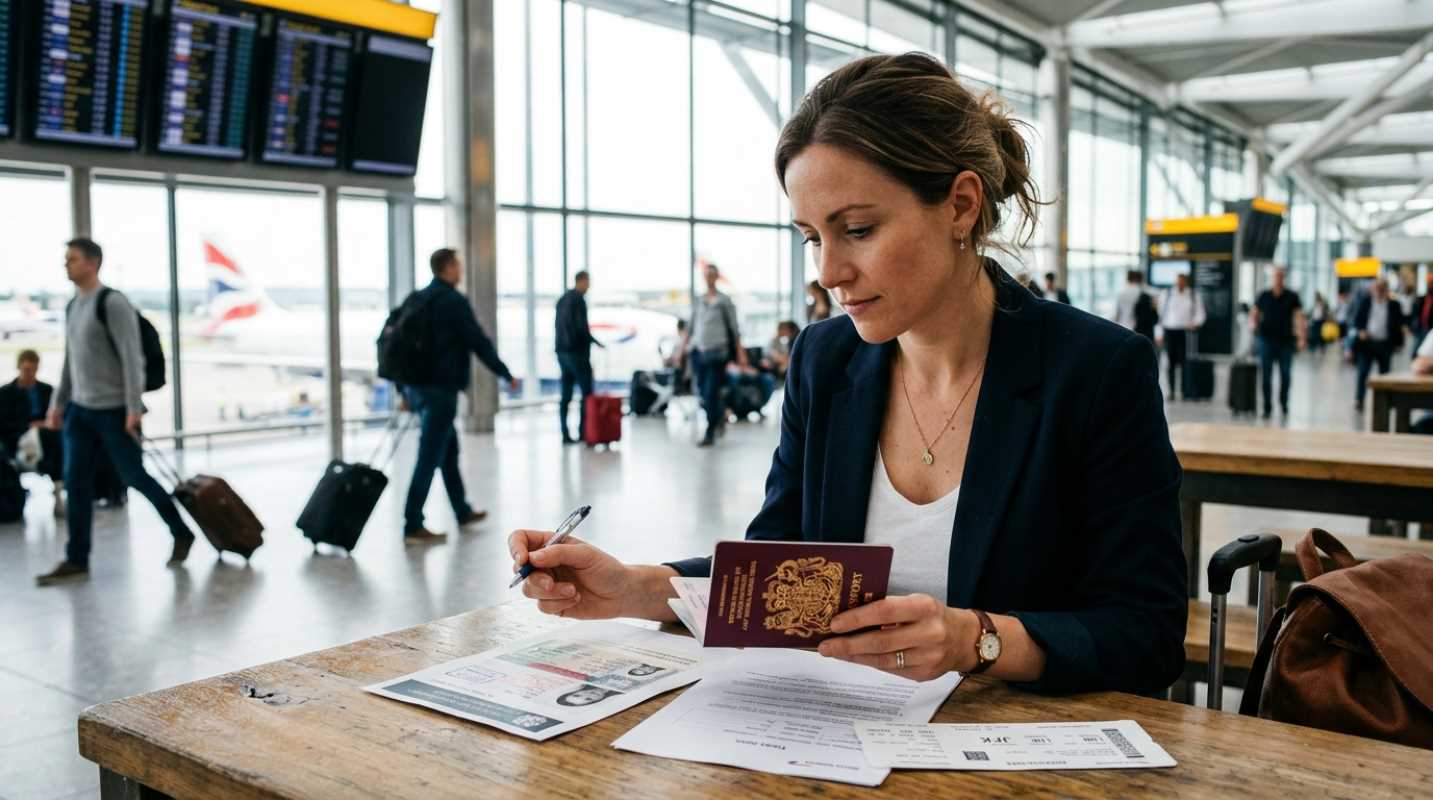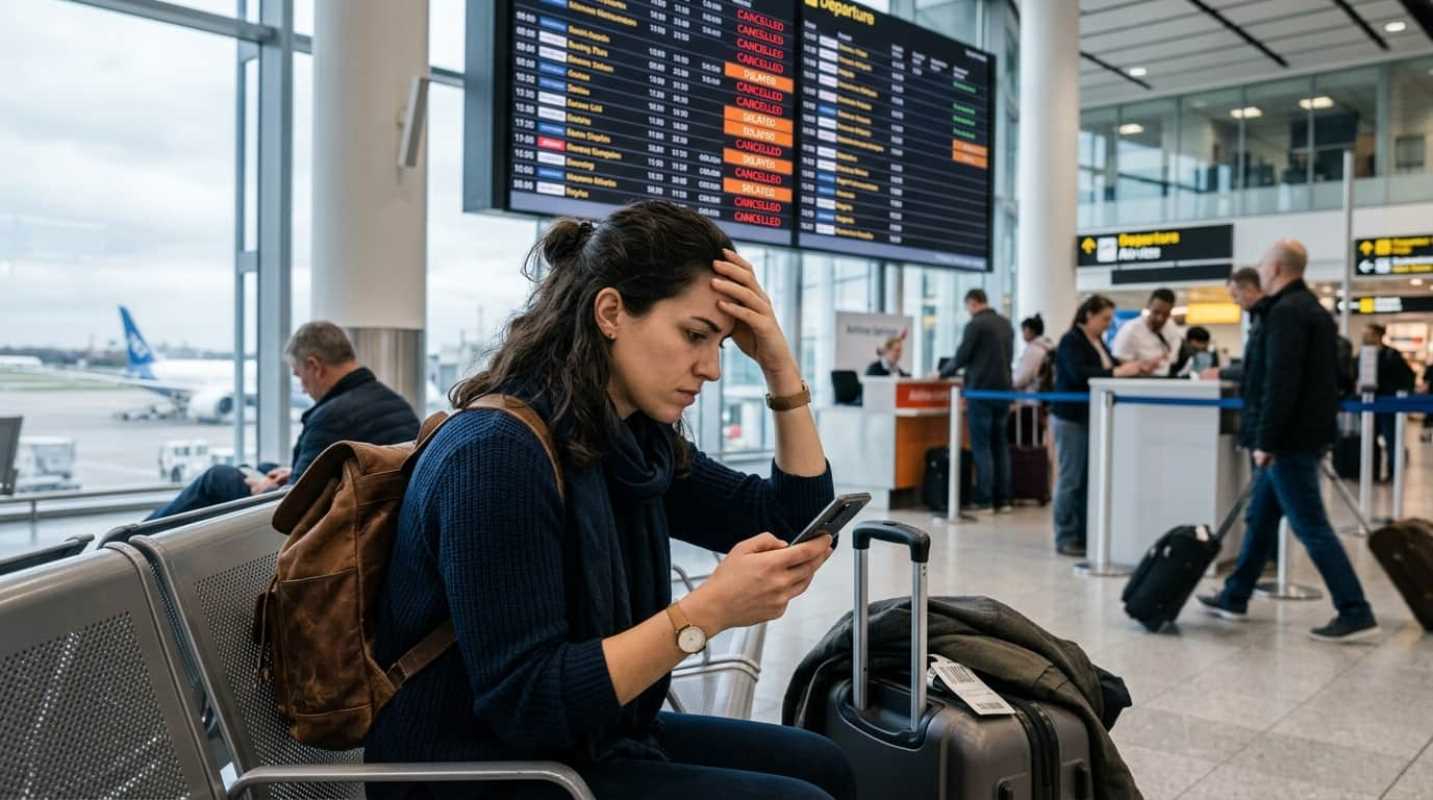
Picture this: you are sitting at the gate, iced coffee in hand, ready for your vacation. Then, the dreaded chime. Your flight is cancelled. Before you let panic take over, you need to know that the power dynamic between you and the airline has shifted in a major way. A couple of years ago, the U.S. Department of Transportation (DOT) rolled out a massive update called the Automatic Refund Rule, which went into full effect in late 2024.¹
This rule completely changed the game for travellers. Airlines used to have a bad habit of pushing passengers into accepting travel vouchers. They would make it seem like a voucher was your only option. But those vouchers often expire, or come with so many restrictions that they are practically useless.
So what does this actually mean for you? If your flight is cancelled or significantly delayed and you choose not to travel, the airline is legally required to automatically issue a full cash refund to your original payment method. They cannot force you to accept travel vouchers or credits.
A significant delay is defined very clearly:
• Domestic flights: A departure or arrival time change of three hours or more.
• International flights: A departure or arrival time change of six hours or more.
Other triggers for an automatic refund include a change in your departure or arrival airport, an increase in connections, or a downgrade in your class of service.
There is a big difference between airline-controlled delays and force majeure events. If a massive blizzard hits, that is force majeure. The airline must still refund your ticket if you choose not to fly, but they do not have to pay for your hotel or meals. If the delay is due to a crew shortage or mechanical issue, that is a controllable delay, and you hold all the cards.
The First Hour and What to Do If Your Flight Is Delayed
The moment the flight board turns red, a race begins. Hundreds of passengers are about to swarm the gate agent. Do not join that line. It is a slow road to nowhere. Why avoid the gate agent line? Because that single agent is trying to help a line of two hundred angry people. They are stressed, the system is slow, and by the time you reach the front, the best alternative flights will be completely booked. The digital route is simply faster.
Instead, open your airline's mobile app immediately. Most airlines have built self-service rebooking tools directly into their apps that bypass the human queue entirely.
At the same time, call the airline's customer service line. If the U.S. customer support line has a massive wait time, here is a pro tip: call the airline's international support numbers in countries like Canada, the UK, or Australia. The agents speak English, and their wait times are often a fraction of the U.S. lines.
Make sure you document everything. Take screenshots of the delay notifications on your phone. Ask a gate agent to state the official reason for the delay, or look it up in the app. You will need this paper trail later.
If the delay is controllable and lasts more than three hours, ask the gate agent for meal vouchers. If the delay pushes your flight to the next day, the airline must provide complimentary hotel lodging and ground transportation. This is not just a nice gesture. Major U.S. carriers have committed to this on the DOT Customer Service Dashboard.
Getting the most from Your Airline Compensation Guide
Let's talk about getting paid. The rules depend entirely on where your flight starts and ends.
In the U.S., you do not get automatic cash compensation just for being delayed if you still choose to fly. But you do get automatic refunds for baggage fees if your luggage is not delivered within 12 hours of a domestic flight arriving at the gate, or 15 to 30 hours for international flights. You also get refunds for any unused extra fees, like Wi-Fi or seat selection.
There was a brief regulatory battle over flight renumbering. In late 2025, the DOT temporarily paused enforcement of a rule that treated simple flight renumbering as a cancellation.² This pause is active until June 30, 2026, while regulators refine the definition.
If you are flying within Europe, or departing from an EU airport, you are protected by EU261 (and UK261 in the United Kingdom).³ This is the gold standard of passenger rights. If you arrive at your final destination three or more hours late, you are entitled to cold, hard cash on top of food and lodging. In 2024, more than 218,000 flights across the EU and UK were delayed by at least three hours, meaning a lot of passengers were eligible for these payouts.
The cash payouts are based on flight distance:
• Short flights under 1,500 km: You get €250 (roughly $270 USD).
• Medium flights between 1,500 km and 3,500 km: You get €400 (roughly $430 USD).
• Long flights over 3,500 km: You get €600 (roughly $650 USD).
Airlines often try to wiggle out of these payments by claiming "extraordinary circumstances" like bad weather. But airline staffing shortages, technical faults, and operational issues do not count.
Even during the jet fuel crisis in early 2026, when thousands of flights were grounded across Europe, the European Commission stepped in. On May 8, 2026, they declared that high fuel prices and shortages are not extraordinary circumstances. The airlines had to pay.
Even better, the new EU261 reform deal finalized in June 2026 makes the claim process seamless.⁴ Airlines are now required to send you a direct link to a compensation claim form within 48 hours of your disruption. They also have a strict 30-day deadline to pay you or formally explain their refusal.
IATA's Director General, Willie Walsh, complained that these rules would double the industry's annual compensation costs to €15 billion, claiming it would drive up ticket prices. But consumer groups point out that EU261 has made European passengers 70% less likely to face long delays compared to travelers in the U.S.
Using Credit Cards and Travel Insurance
Although you are dealing with the airline, your wallet might contain a secret weapon. Many premium credit cards offer built-in trip delay protection.
If you paid for your flight with one of these cards, you could be covered for meals, hotel stays, and needed toiletries after a delay of six or twelve hours. This is a lifesaver when airline agents are overwhelmed or refusing to hand out vouchers.
Keep every single receipt. If you have to buy dinner, a toothbrush, or a hotel room because you are stranded overnight, you can submit those receipts to your card's insurance provider for reimbursement. Just make sure to file the claim within their required window, which is usually 21 to 60 days.
If you bought a third-party travel insurance policy, the coverage is even more substantial. Data from travel insurance providers shows that the average insurance payout for a trip cancellation is $5,511, while trip interruptions average $2,707.⁵
Let's look at some of the best tools and services to keep in your travel arsenal for these exact moments.
Proactive Tips to Minimize Travel Stress
You cannot control the weather or mechanical failures, but you can set yourself up to handle them like a pro.
First, book direct flights whenever you can. Connections are where travel plans usually fall apart. If you must book a connection, make sure you have at least a two-hour buffer.
Second, monitor your flight status before you even head to the airport. Do not just rely on the airline's notifications. Use flight tracking apps to see where your incoming plane is coming from. If its previous leg is delayed by three hours, your flight will be delayed too, even if the airline's app still says "on time."
Third, build a travel recovery kit. Keep a portable phone charger, needed medications, a change of clothes, and high-quality snacks in your carry-on bag. Never put these items in your checked luggage.
In 2024, nearly 236 million U.S. passengers experienced a flight delay or cancellation. That is nearly one in four travelers. If you get stuck at airports like Washington Reagan National (DCA), LaGuardia (LGA), or Dallas/Fort Worth (DFW), which are some of the worst U.S. airports for cancellations, you will be glad you prepared.
Sources:
1. TripIt Blog
https://www.tripit.com/web/blog/travel-tips/DOT-new-rule-airlines
2. Fox Business
https://www.foxbusiness.com/fox-news-air-space/dot-temporarily-halts-enforcement-biden-era-refund-requirements-airline-flight-renumbering
3. Air Traveler Club
https://www.airtraveler.club/news/eu261-compensation-summer-2026-file-claim/
4. One Mile at a Time
https://onemileatatime.com/news/european-union-updating-flight-delay-compensation-rules/
5. Forbes
https://www.forbes.com/sites/larryolmsted/2024/07/10/you-can-get-compensation-for-airline-delays-this-summer-heres-how/
*This article on tikritus.com is for informational and educational purposes only. Readers are encouraged to consult qualified professionals and verify details with official sources before making decisions. This content does not constitute professional advice.*