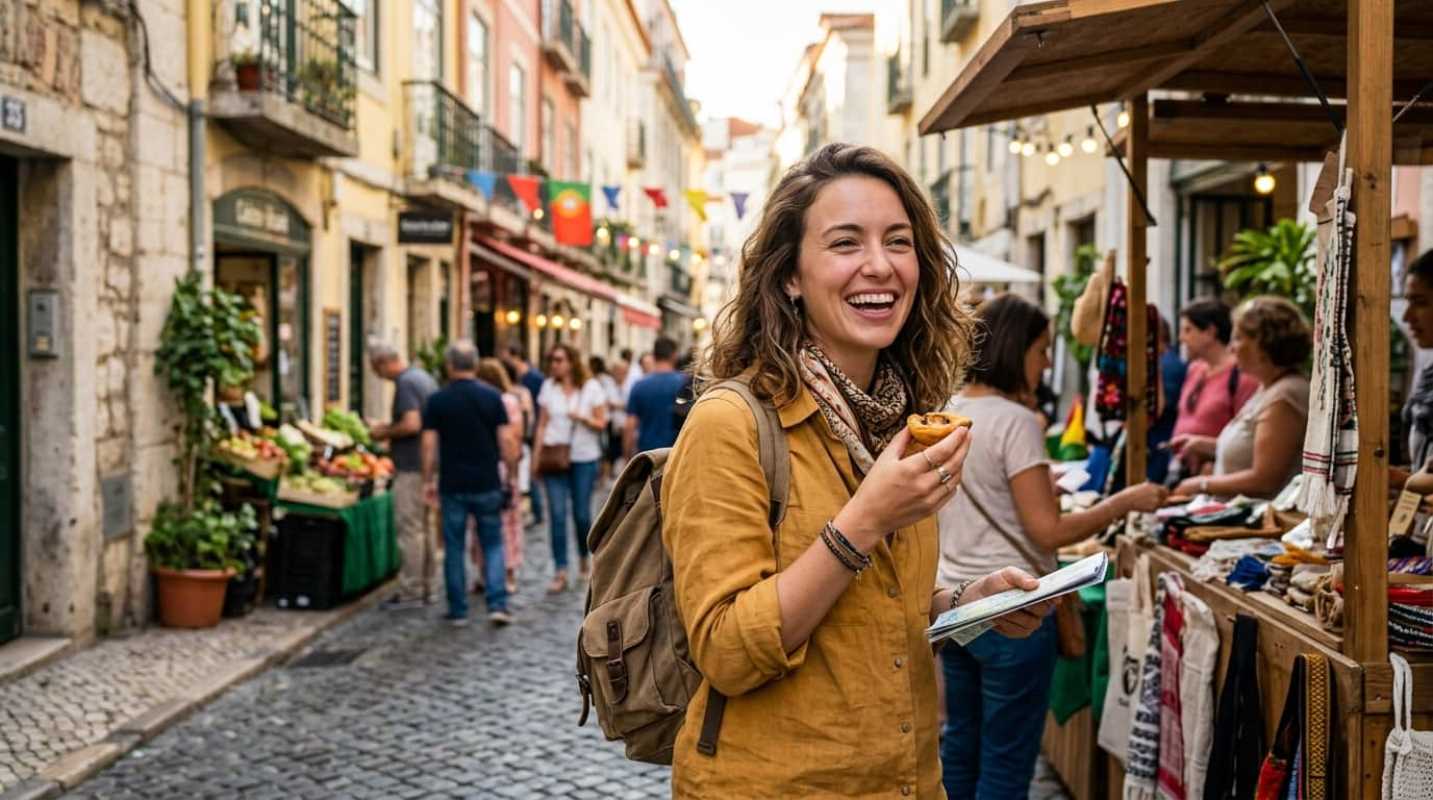
Have you ever stood in a two-hour line for a mediocre, overpriced pastry just because a social media video told you it was a must-do? We have all been there. You get to the front, take the photo, take a bite, and realize you just paid ten dollars for something that tastes like cardboard. You are not experiencing local culture. You are participating in a highly coordinated marketing loop.
The Psychology of the Tourist Trap Why We Fall for Them
Overtourism is a massive issue in 2026, but the seeds were planted years ago. Back in 2024, Europe alone saw 747 million international arrivals. This sheer volume of people creates a massive demand for convenience. When millions of travelers land in a new city, they often default to what is easy and familiar.
This is where the distinction between a landmark and a tourist trap becomes important. The Colosseum is a landmark. The restaurant next to it with laminated menus and a staff member waving you inside is a tourist trap. One is a piece of human history, while the other is a business designed to extract your money as quickly as possible.
Social media algorithms make this problem worse by trapping us in "Instagram-first" travel bubbles. The hashtag #dupe surpassed 5.9 billion views on TikTok by late 2024, showing that people want alternatives.¹ Yet, many still follow the exact same curated paths. Algorithms feed us the same locations, creating a self-fulfilling prophecy where everyone goes to the same spots to take the same photos.
Convenience is the enemy of cultural depth. When we are tired, hungry, and dealing with a language barrier, we choose the easiest option. We look for English signs, familiar foods, and crowded spots because we assume crowd size equals quality. Usually, it just means high marketing budgets.
The Art of the Pre-Trip Digital Detox
To find the real soul of a destination, you need to change how you research. If you start your planning by searching "top 10 things to do in Rome" on Google, you are already setting yourself up to visit tourist traps. Those generic listicles are often written by writers who have never set foot in the city, or they are heavily sponsored by tour companies.
Instead, try a digital detox from mainstream travel blogs. Turn your attention to niche forums and community-driven platforms. Subreddits like r/AskEurope or city-specific boards are incredible resources. Locals on these forums are usually happy to share their favorite neighborhood spots, and they will quickly tell you which famous attractions are worth skipping.
You can also use Google Maps like a detective. When you find a restaurant that looks interesting, do not just look at the overall rating. Filter the reviews to show only the ones written in the local language of the country you are visiting. If a trattoria in Florence has thousands of reviews but only a handful are in Italian, it is a tourist trap. If the reviews are mostly in Italian, you have found a winner.
Tactics for Authentic Travel Experiences on the Ground
Once you arrive at your destination, you need practical approaches to handle the streets. Spotting a tourist trap in real life is actually very easy if you know what to look for.
Watch out for these classic red flags
• The aggressive barker: If a restaurant has a staff member standing outside trying to pull people in, walk away. Quality food does not require high-pressure sales tactics.
• The encyclopedia menu: A massive menu printed in multiple languages, especially one with photos of the food, is a major warning sign. It means the kitchen is trying to please everyone and likely using frozen, mass-produced ingredients.
• The timing mismatch: In culinary capitals like Paris or Madrid, locals do not eat dinner at 5:00 PM or 6:00 PM. If a restaurant is packed at 5:30 PM, it is catering entirely to tourists.
• Low-substance museums: Seasoned travel experts warn travelers to avoid highly commercialized pop-up attractions like "Torture Museums" or "Instagram Museums" in European capitals. Prague’s Museum of Torture, like, holds dismal ratings because it relies on cheap, mass-produced props rather than actual history.³
• The street scams: Be wary of aggressive vendors offering "free" items like friendship bracelets or flowers in Paris, Rome, and Barcelona.⁴ Once the item is on your wrist, they will aggressively demand payment.
To bypass these traps, try using these simple boots-on-the-ground rules
• The three-block rule: Walk three blocks away from any major tourist attraction. The souvenir shops disappear, the prices drop, and you will find the neighborhood cafes where locals actually spend their time.
• Follow the scent: Look for street food stalls with long lines of locals, not tour buses. If the people in line are speaking the local language, get in line.
• Talk to the baristas: Ask the person making your morning coffee where they go for lunch. Keep it low-pressure and friendly. They know the neighborhood better than any travel app ever will.
To help you plan your next adventure away from the crowds, here are a few highly recommended tools and platforms.
Embracing Slow Travel Quality Over Quantity
A massive shift in travel mindset has taken place over the last couple of years. According to Booking.com research, 77% of travelers actively seek authentic experiences representative of local culture, and 73% want the money they spend to go directly back into the local community.²
This is where slow travel comes in. Slow travel means spending more time in fewer places. Instead of trying to see three countries in a week, spend that week in a single neighborhood. Hilton’s trends research highlights that 74% of travelers prioritize getting recommendations directly from locals rather than relying solely on online guides.⁵ You can only do this when you slow down and build a daily routine in a destination.
Where you stay matters just as much as how long you stay. Choose neighborhood stays over massive city-center hotels. Booking a guesthouse or apartment in a residential neighborhood instantly changes your experience. You will shop at the local market, buy bread from the neighborhood baker, and walk the streets with people who actually live there.
You should also embrace the "destination dupe" trend. Swap famous, overcrowded hotspots for comparable, culturally rich alternatives. Swap Barcelona for Girona, where you can experience medieval architecture without the crushing crowds. Swap Venice for Ljubljana, Slovenia, which has beautiful canals and a highly sustainable, pedestrian-only city center. Swap Positano for Maratea, or swap Sydney for the urban arts scene of Perth.
Becoming a Traveler, Not a Tourist
Success comes from the connections you make and the stories you bring home, not from checking off twenty famous landmarks. If you plan every single hour of your day, you leave no room for serendipity. The best travel memories usually happen when you take a wrong turn or get lost in a neighborhood you did not plan to visit.
Try to leave some blank spaces in your itinerary. Allow yourself to just exist in a place without a plan. Walk down a street simply because it looks interesting. Sit in a park and watch the world go by.
Trust your intuition over curated travel guides. You do not need a five-star review on an app to validate your experience. Sometimes, the most authentic meal of your trip will be at a quiet, unmarked diner where no one speaks English, and that is exactly the point.
Sources:
1. Hello Vacay
https://hellovacay.com/articles/travel-checklists/2025-travel-trend-destination-duping/
2. Booking.com News
https://news.booking.com/bookingcoms-2025-research-reveals-growing-traveler-awareness-of-tourism-impact-on-communities-both-at-home-and-abroad/
3. Money Digest
https://www.moneydigest.com/1891187/european-tourist-trap-rick-steves-warns-tourist-to-avoid-save-money-torture-museum/
4. Isango! The Guidebook
https://www.isango.com/theguidebook/the-ultimate-guide-to-avoiding-tourist-traps-in-europe/
5. Hilton Stories
https://stories.hilton.com/2025trends/slow-travel-the-growing-desire-to-travel-like-a-local