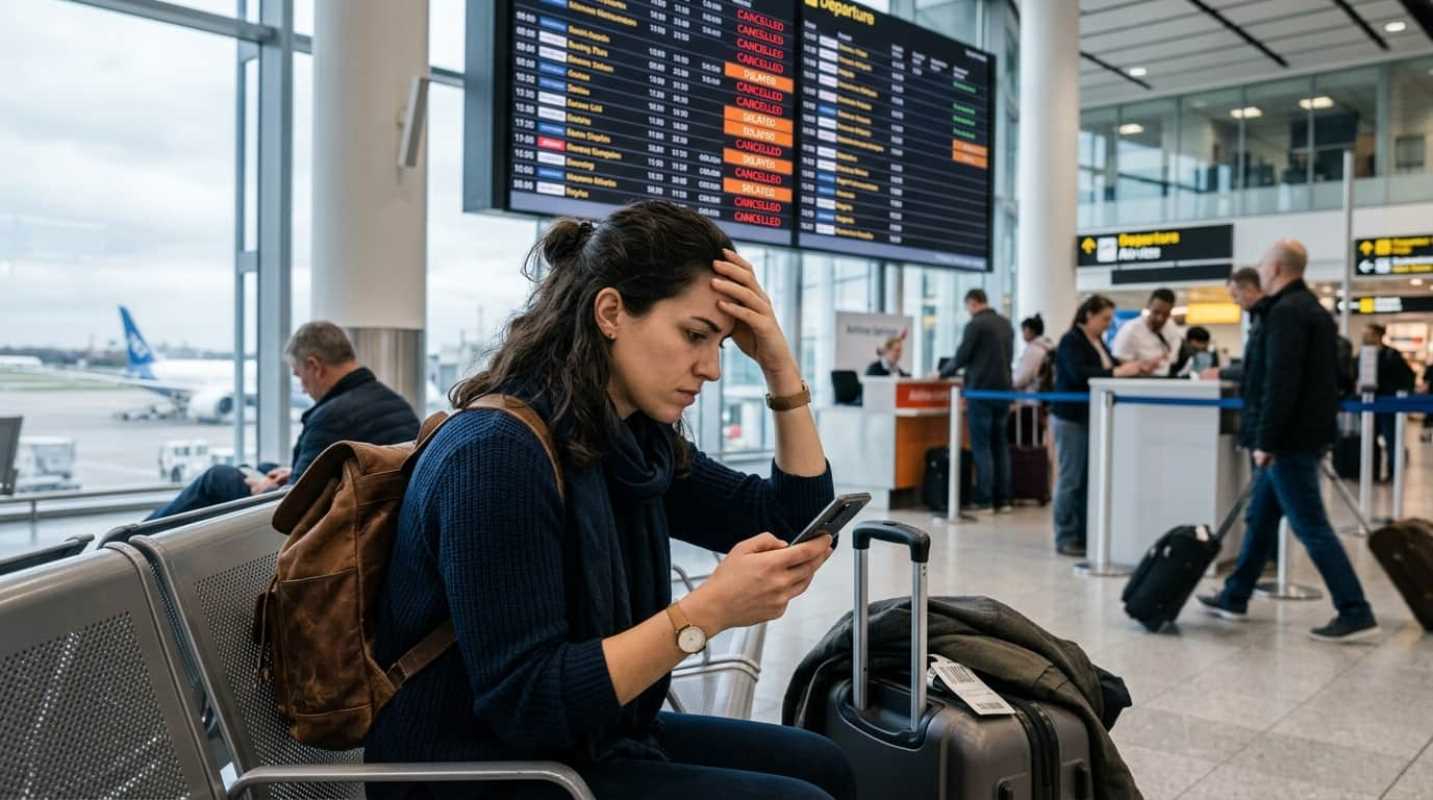
Have you ever stepped off an eight-hour flight feeling like a zombie, only to find yourself wide awake at 3:00 AM staring at the ceiling of your hotel room? Your stomach is growling for dinner, your eyes are burning, and your brain feels like it's wading through wet concrete.
That miserable experience isn't a sign of mental weakness. It's a real physiological disruption caused by a clash between your environment and your biological clock. Deep inside your brain, a cluster of cells called the suprachiasmatic nucleus controls your body's 24-hour cycle. When you cross multiple time zones quickly, this internal clock stays stuck on home time while your destination is running hours ahead or behind.
Scientists recognize that jet lag is a two-clock problem. Although natural light controls the central clock in your brain, food and meal timing regulate peripheral clocks in your liver and digestive system. When your brain, liver, and local surroundings operate on different schedules, chaos ensues. In fact, roughly 68 percent of international business travelers report dealing with jet lag symptoms on a regular basis.¹
Recovery usually takes about one day per time zone crossed. Traveling east takes longer because human biological clocks naturally run slightly longer than 24 hours. Extending your day when flying west is biologically easier than shortening it when flying east. But you don't have to surrender a week of your trip to brain fog. By taking control of light, food, and timing, you can train your biological clock to adjust much faster.
Pre-Flight Prep: Adjusting Sleep Schedules Before a Flight
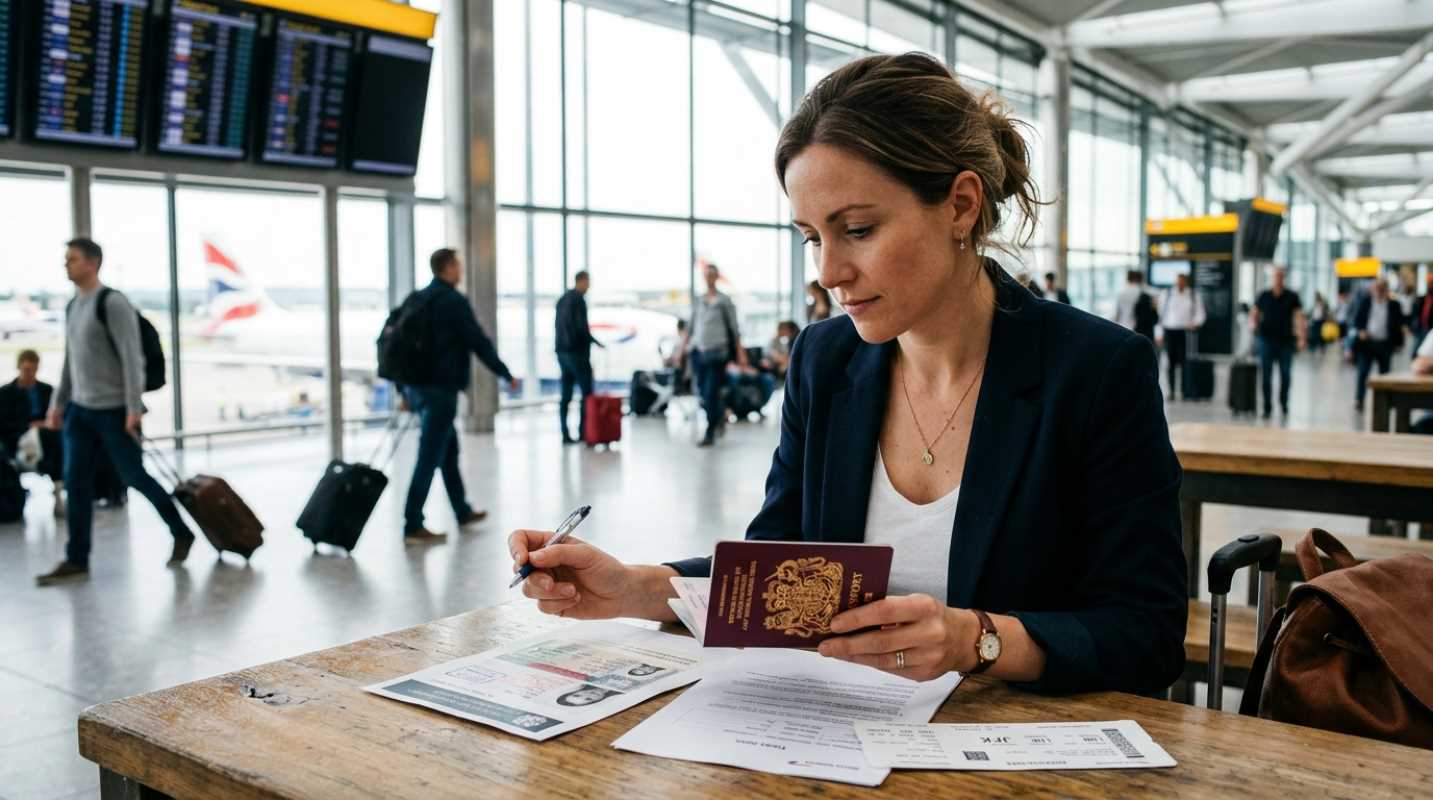
Winning the battle against jet lag begins days before you pack your bags. Waiting until you land to start adjusting your routine sets you up for a rough couple of days.
If you want to minimize the shock to your system, try shifting your sleep schedule by 30 to 60 minutes each day for three days before departure. Flying east? Go to bed and wake up an hour earlier each day. Flying west? Push your routine an hour later. Shifting your schedule just a little bit before takeoff eliminates up to an hour and a half of time zone mismatch before you even board the plane.
Strategic light exposure is your strongest tool during this prep phase. Sunlight sends a direct biological signal to your brain that it's time to be awake.
• Eastbound Preparation: Seek bright light early in the morning and dim your lights early in the evening.
• Westbound Preparation: Get bright light exposure late in the afternoon or early evening to keep your body awake longer.
• Caffeine Control: Cut off caffeine intake at least six hours before your target bedtime so it doesn't interfere with early sleep attempts.
In-Flight Tactics: Managing Time Zone Changes Mid-Air
The moment you step onto the aircraft, your mind and body should transition to destination time. Set your watch and phone to your new time zone immediately upon boarding.
One simple weapon against travel fatigue is a fasting approach that targets your body's liver clock. Although light resets your brain clock, food resets your metabolic clock. If you fast during your flight for 12 to 16 hours and stick strictly to water, your metabolic system enters a temporary pause state. When you break your fast with a nutritious breakfast at the normal local morning time after landing, your digestive organs instantly sync up with the new time zone.
Managing sleep on the plane requires strategic discipline.
• Match Destination Hours: Only sleep on the plane if it is currently nighttime at your destination.
• Limit Naps: If it's daytime at your arrival spot, stay awake or limit yourself to a quick 20-minute power nap.
• Hydrate Constantly: Airplane cabins are drier than most deserts. Drink plenty of water and electrolytes, as mild dehydration doubles the feeling of physical fatigue.
The Arrival Protocol: Jet Lag Recovery Techniques That Work
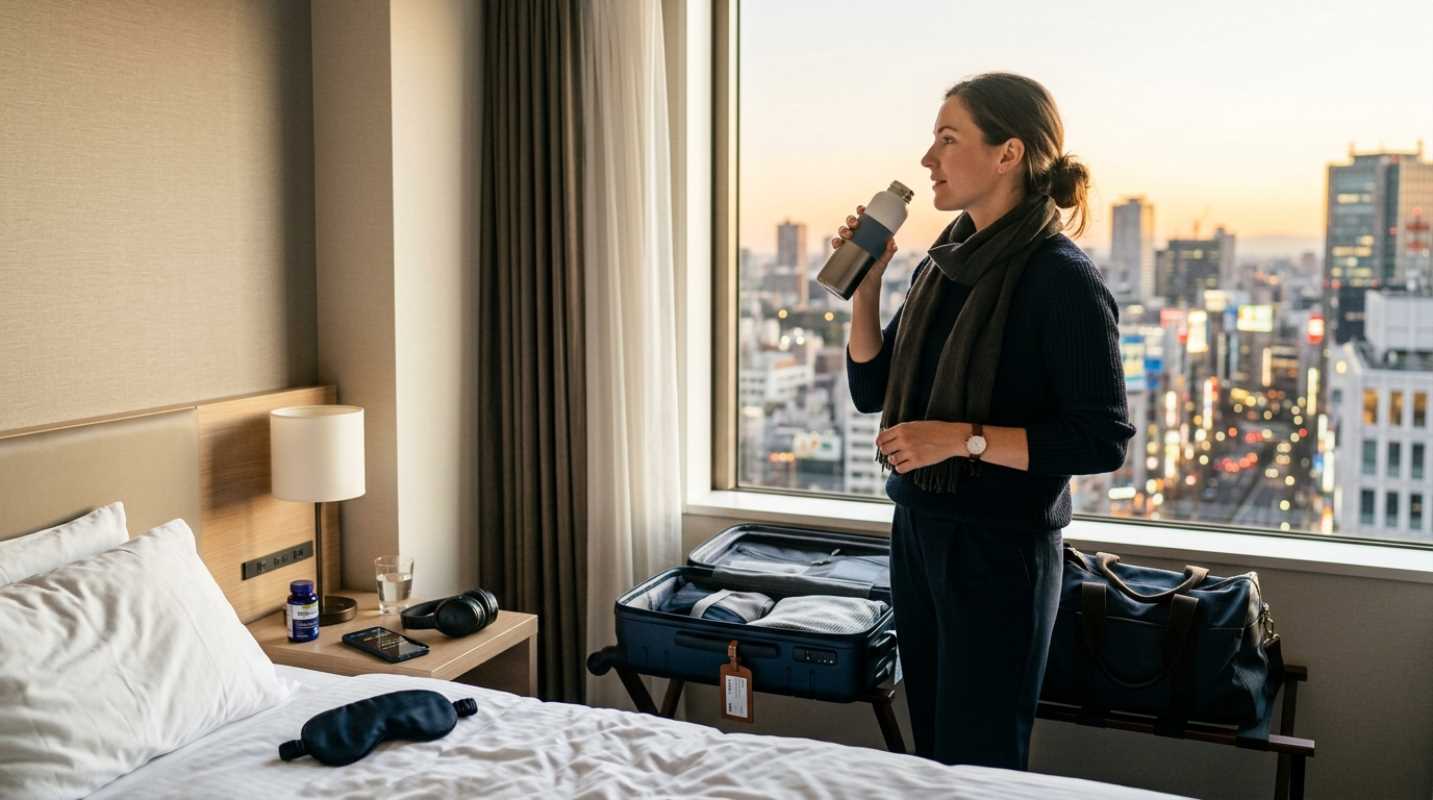
What you do during your first 24 hours on the ground determines how quickly you will recover. The urge to crash into your hotel bed at 2:00 PM will be powerful, but giving in will lock your body into jet lag for days.
Step out into natural outdoor sunlight as soon as possible after landing. Outdoor light is many times brighter than indoor lighting and acts as a primary reset button for your brain clock. If you flew east, spend 20 to 30 minutes outside in the morning sun. If you flew west, soak up late afternoon light to delay your sleep cycle.
Physical movement is another clear signal for your body. A light walk, outdoor stretch, or easy workout helps wake up your muscles and metabolic systems. Keep yourself active during local daylight hours and fight the urge to take long afternoon naps. If you absolutely must sleep, set an alarm for 30 minutes maximum so you don't enter deep sleep cycles that ruin your nighttime rest.
Supplements and Science: What Experts Say
Navigating supplements can be tricky, but modern circadian research offers clear guidance on what actually helps and what makes things worse.
Melatonin is the most popular travel supplement, but many people use it incorrectly. Melatonin isn't a heavy sleeping pill. It's a timing signal that tells your brain it's dark outside. High doses of 5 to 10 milligrams often leave you feeling groggy and hungover the next morning. Instead, take a micro-dose of 0.5 to 3 milligrams fast-release melatonin about 30 to 60 minutes before your target destination bedtime.²
Prescription sleeping pills might seem like an easy fix, but they rarely solve jet lag. They induce forced sedation without shifting your underlying biological clock, leaving you just as jet-lagged when the medication wears off.
Modern technology makes timing these adjustments much easier. Algorithmic tracking apps analyze your sleep patterns and flight details to give you exact times for seeking sunlight, wearing blue-light-blocking glasses, or taking low-dose melatonin. Wearable light therapy devices are also popular for business travelers who need targeted morning light cues inside dark cabins or windowless hotel rooms.³
Mastering Your Travel Rhythm
Beating jet lag requires giving your body clear, coordinated signals through light, food, movement, and timing.
View jet lag as a manageable challenge rather than an inevitable curse of long-distance travel. When you align your daily choices with your biological rhythms, you recover in a fraction of the time.
Listen to your body, stick to your timing plan, and give yourself grace during the first day. With these approaches in your travel toolkit, you can spend less time struggling with exhaustion and more time enjoying your destination.
Sources:
1. CDC Yellow Book: Jet Lag Disorder
https://www.cdc.gov/yellow-book/hcp/travel-air-sea/jet-lag-disorder.html
2. Timeshifter: Jet Lag Myths Debunked
https://www.timeshifter.com/jet-lag/jet-lag-myths-debunked
3. CU Anschutz: How to Combat Jet Lag
https://news.cuanschutz.edu/medicine/how-to-combat-jet-lag
*This article on tikritics is for informational and educational purposes only. Readers are encouraged to consult qualified professionals and verify details with official sources before making decisions. This content does not constitute professional advice.*