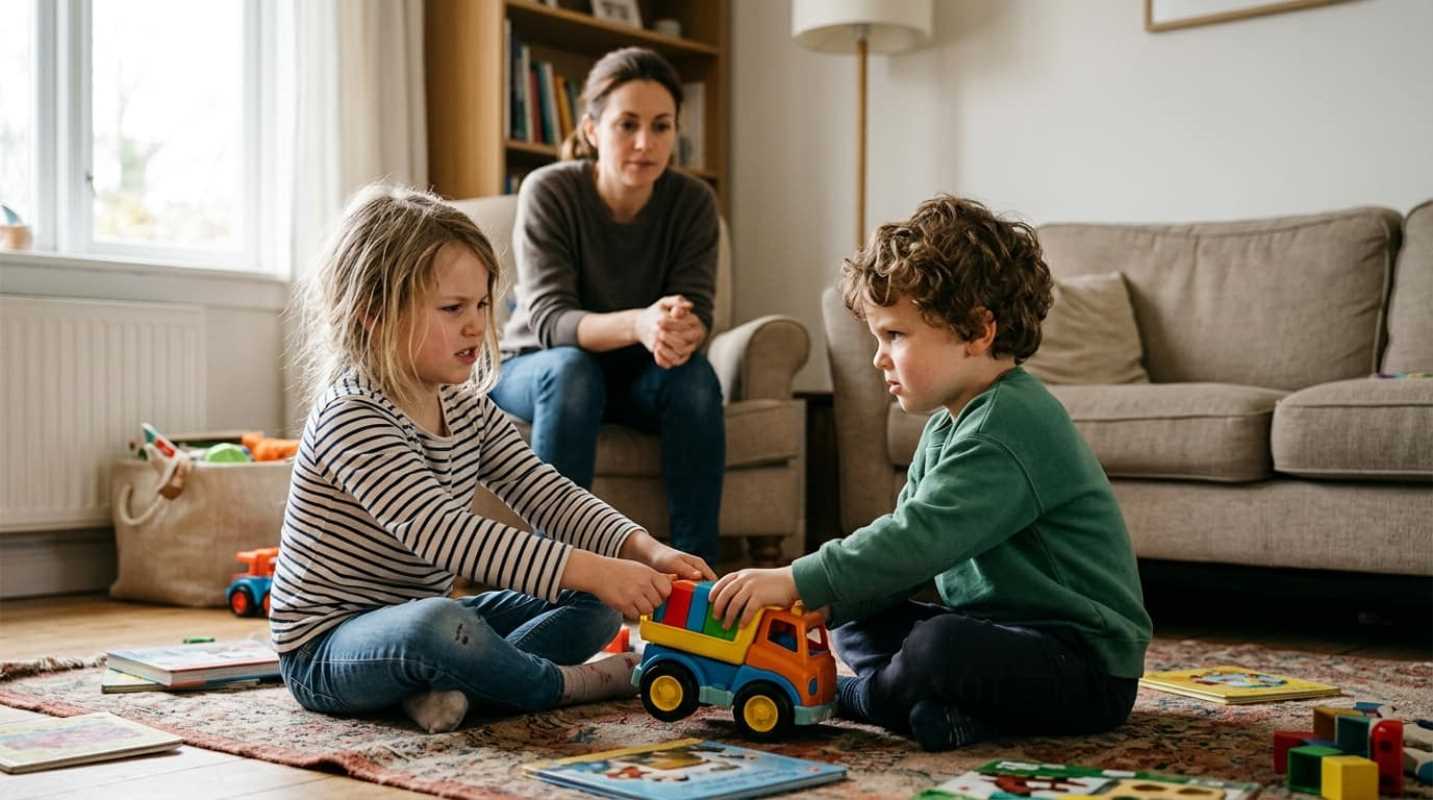
If you have more than one child, you know the sound. It starts with a sharp gasp, escalates into a screech over a toy truck, and ends with someone screaming that life is completely unfair. It is exhausting. On heavy days, it feels like you are running an endless crisis hotline inside your own living room.
Here is something that might give you a bit of relief. Research from the University of New Hampshire shows that young siblings under age ten get into squabbles up to eight times every single hour.⁹ That is not a sign that your parenting is broken. It is standard human behavior.
Sibling conflict is actually an important social testing ground. Your home is a private practice arena where kids learn how to state boundaries, handle disappointment, and negotiate with another person. The trick is knowing when your kids need your direct help and when you ought to take a step back and let them figure it out.
Decoding the Chaos: Normal Sibling Conflict vs Harmful Behavior
Not all fights are created equal. To manage your energy, you have to separate normal sibling friction from behavior that actually requires immediate intervention.
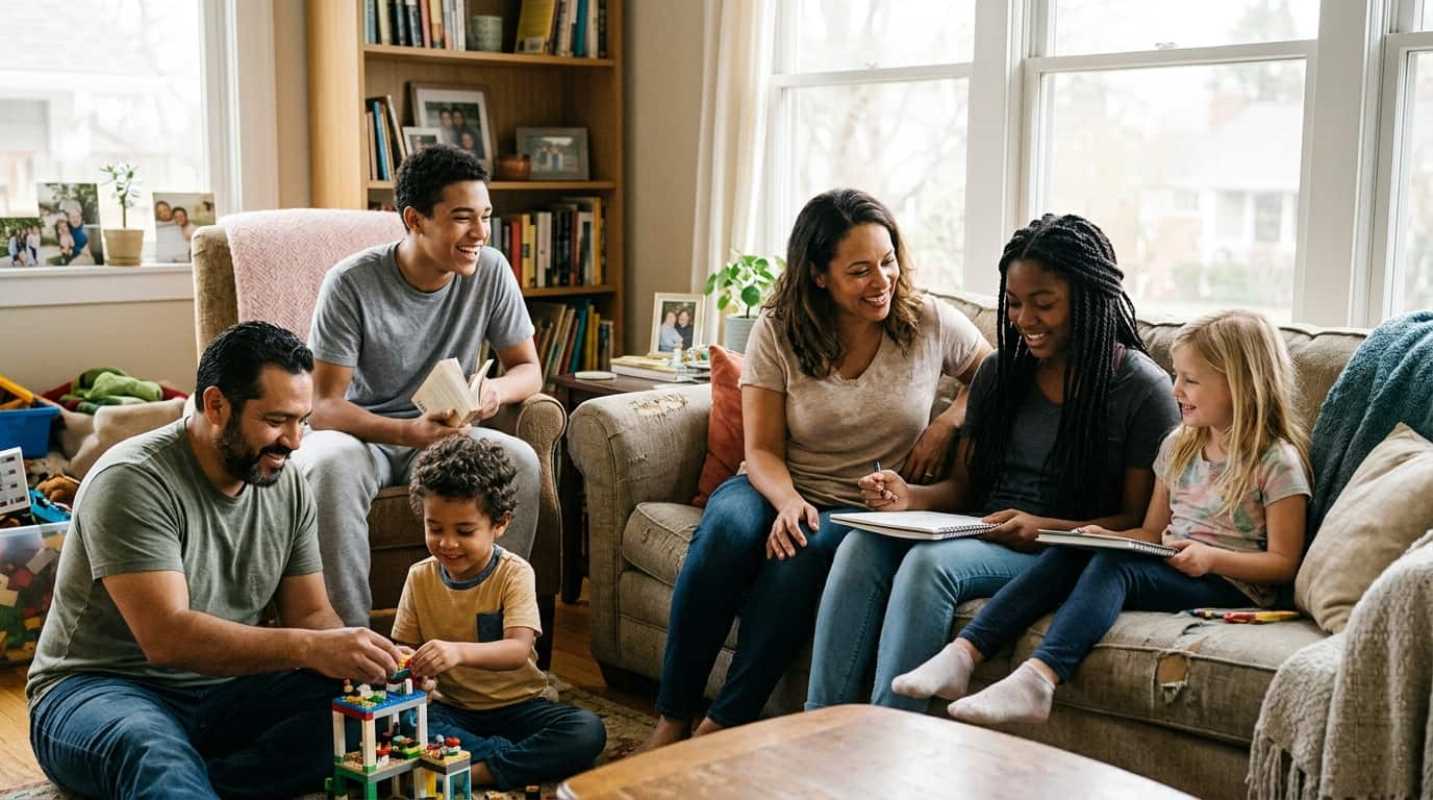
Normal conflict usually looks loud, fast, and messy. Kids argue over who sits in the front seat, who gets the blue cup, or who touched whose LEGO tower. In these moments, both kids generally have equal footing. They are testing out their voice and learning how to hold their ground.
Harmful behavior is completely different. You need to step in immediately if you spot any of these red lines.
• Physical safety risks: Hitting, kicking, throwing hard objects, or an older child physically overpowering a younger one.
• Targeted emotional cruelty: Persistent name-calling designed to humiliate, mocking deeply personal insecurities, or relentless verbal bullying.
• Emotional flooding: When a child gets so overwhelmed by anger that their rational brain completely shuts down and they drop into a fight-or-flight state.
• Unbalanced power dynamics: Situations where one child is consistently victimized and feels helpless or unsafe in their own home.
When safety is threatened, you step in instantly. But when it is just loud, low-stakes squabbling, your best move might be staying on the sidelines.
The Art of Non-Intervention: Letting Them Solve It
Why is it so hard to sit on our hands when our kids start bickering? Naturally, we want peace. We want the noise to stop.
The trouble is that jumping in too quickly turns you into a courtroom judge. When you rush over to demand who started it or who had the toy first, you inadvertently create a winner and a loser. The kid who loses feels resentful, while the kid who wins learns that running to an adult is easier than solving a problem on their own.
When you step back, you give your kids room to practice negotiating. They learn that a disagreement does not mean the end of play, and that compromise gets everyone back to having fun much faster.
Stepping back does not mean ignoring your children. It means moving from a referee mindset to an observer mindset. Stay nearby so they feel your presence, but give them a minute to test out their own solutions before you utter a single word.
If they run to you demanding that you fix it, toss the responsibility right back to them. You can say something like: "That sounds like a really tricky problem. What are two ideas you both think might be fair?"
Conflict Resolution Techniques for Siblings
When a fight escalates to the point where you must step in, your role is to coach, not to judge. Do not try to figure out who is guilty. Focus on calming the temperature down and teaching them how to communicate.
Here are a few practical tools you can use in the middle of a conflict:
1. Pause and regulate: If emotions are running at a ten out of ten, do not try to reason with them. Separate their bodies calmly and let everyone take a breather until logical thinking returns.
2. Sportscast without taking sides: Describe what you see in a neutral voice. Say: "I see two kids who both want to play with the same controller right now." This makes both children feel heard without declaring a bad guy.
3. Teach "I" statements: Help them speak directly to each other instead of yelling at you. Guide them to say "I feel mad when you knock over my blocks" instead of "You are the worst!"
4. Hold problem-solving sessions later: Wait until the heat has completely died down, perhaps during afternoon snack time. Ask them how they think a similar issue should be handled next time.
Your own response matters deeply here. Research shows that authoritative parenting, which balances high warmth with clear boundaries, dramatically lowers sibling friction compared to strict punitive measures or passive permissive responses.²
Building Sibling Bonds Beyond the Conflict
Clinical experts often point out that sibling rivalry is rarely about the toy itself.⁵ It is usually about a child's deep desire to feel seen, valued, and secure within the family unit. When kids feel confident about their place in your heart, the urge to compete with their brother or sister drops significantly.
You can actively build sibling warmth during peaceful moments by setting up shared experiences. Give them a joint task where they have to work as a team, like building a fort against the living room couch or baking cookies together.
Dedicated one-on-one time is another powerful tool. Spending just ten or fifteen minutes of focused, uninterrupted time with each child every day works wonders. When a child knows they do not have to fight for your attention, the daily friction between siblings plummets.
Finally, make a big deal out of cooperation. When you catch your kids sharing a snack, helping each other tie shoes, or laughing at a joke together, name it out loud. Positive reinforcement shows them what healthy connection looks like.
Building Resilient Relationships for the Long Haul
It is easy to panic when your kids are yelling at each other, wondering if they will end up hating each other as adults. Take a deep breath. Loud disagreements during childhood are a phase of development, not a permanent declaration of their adult relationship.
Think of sibling conflict as a social laboratory. By shifting your role from a referee who hands out sentences to a coach who teaches practical skills, you give your kids the exact tools they need to handle relationships for the rest of their lives.
Trust the process. Step back when it is safe, step in with calm authority when boundaries are crossed, and remember that today's chaotic bickering is slowly building tomorrow's lifelong allies.
Sources:
1. Sibling Rivalry Tips to De-Escalate Fights and Build Stronger Bonds
https://www.healthychildren.org/English/tips-tools/healthy-children-podcast/Pages/ep-058-sibling-rivalry-expert-tips-to-de-escalate-fights-and-build-stronger-bonds.aspx
2. Good Inside with Dr. Becky - Sibling Dynamics
https://www.shortform.com/podcast/episode/good-inside-with-dr-becky-2025-09-30-episode-summary-cant-they-just-get-along-lets-talk-siblings
3. Sibling Aggression and Abuse Initiative Research
https://www.unh.edu/ccrc/sites/default/files/media/2022-02/trauma-violence-abuse-2015-tucker-1524838015622438.pdf
*This article on tikritics is for informational and educational purposes only. Readers are encouraged to consult qualified professionals and verify details with official sources before making decisions. This content does not constitute professional advice.*
.jpg)