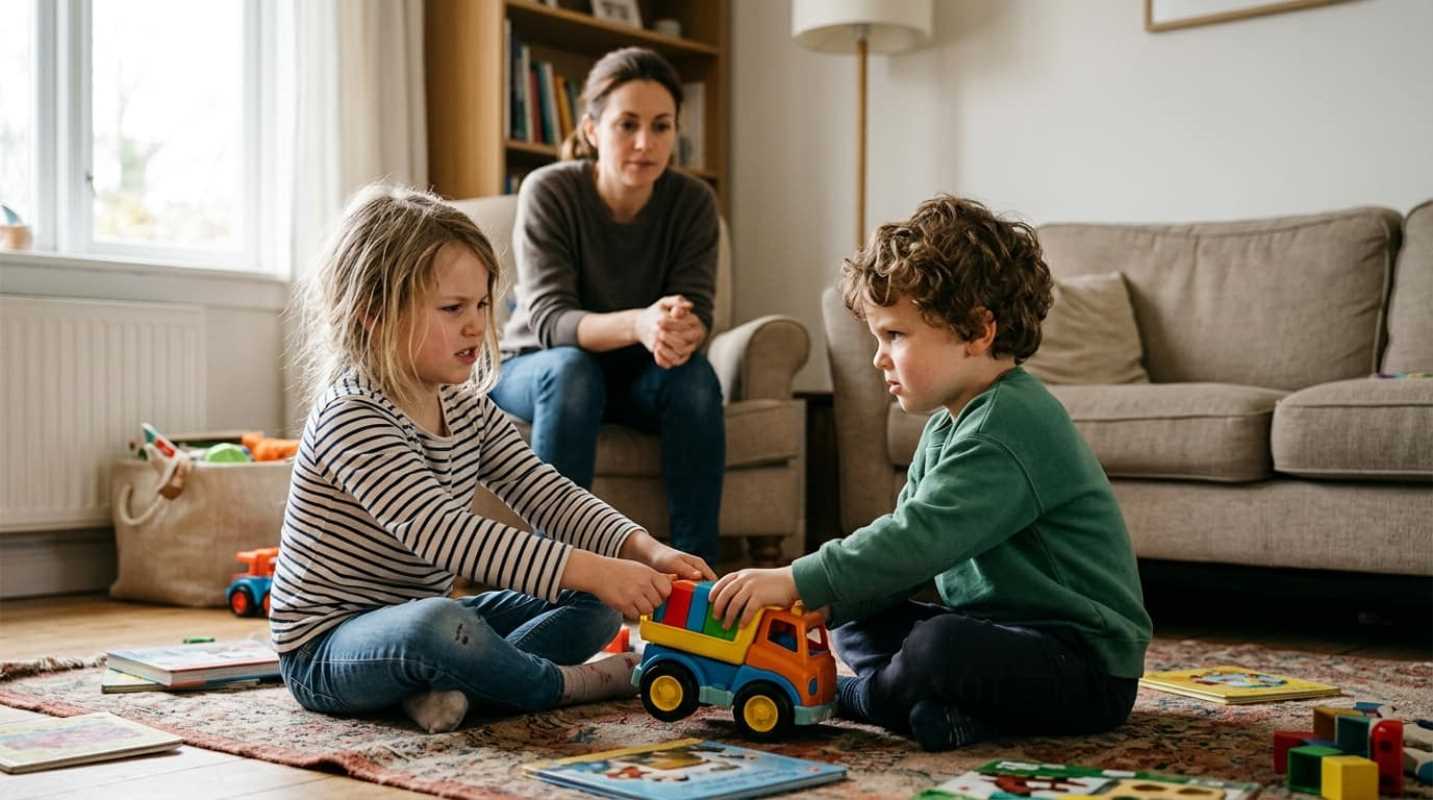
Have you ever sat at your dinner table and felt like you were running a multinational corporation instead of a family? If so, you are not alone. Over 40% of families in the United States are blended, meaning at least one partner has a child from a previous relationship.¹ Around 113 million Americans have at least one step-relationship, and roughly 1,300 new stepfamilies form every single day.¹
Merging two households is a beautiful goal, but it is also incredibly complex. You are not just bringing two adults together. You are combining different histories, routines, and children who are at completely different developmental stages. A toddler needs constant physical reassurance, while a teenager is actively pushing for independence.
How do you balance these competing needs without losing your mind? It takes a lot of intentionality and a healthy dose of empathy. Let's look at how you can handle these complex age dynamics and build a household where everyone feels like they belong.
Respecting Developmental Differences: Toddlers vs. Teens
To keep the peace, you have to understand that children of different ages process family changes in entirely different ways. Expecting a five-year-old and a fifteen-year-old to react the same way to a new stepparent is a recipe for frustration.
Toddlers and preschoolers (ages 2 to 5) are naturally egocentric. They do not really understand the permanence of divorce or remarriage. They often think the world revolves around them, which means they might secretly blame themselves for the split. The good news is that they usually accept a new stepparent quickly, provided they feel safe. They need rigid routines, predictable schedules, and constant physical reassurance to feel secure.
School-age children (ages 6 to 9) are in a different boat. They are highly sensitive to fairness and sharing. When stepsiblings enter the picture, these kids often worry about losing attention, toys, or their physical space. They will notice even the slightest hint of favoritism, so you have to be extra vigilant about equal treatment.
Tweens and young adolescents (ages 10 to 14) usually have the hardest time adjusting to a blended family. They are already dealing with hormonal changes and trying to figure out who they are. Because they have a longer history with their biological parents, they are highly prone to loyalty conflicts. They might feel that liking a stepparent is a direct betrayal of their other biological parent. They will often push back hard against a new stepparent's authority.
Older teens (ages 15 and up) are already looking toward the exit sign as they prepare for adulthood. They might not want to invest a lot of emotional energy into the new family unit. Respect their independence. Do not force them to participate in every single family bonding activity, but always keep the door open for them.
The Golden Rules of Step-Parenting Advice
When you first blend your households, it is tempting to try to force everyone to be a happy family right away. But stepfamily experts Cameron Normand and Dr. Todd Jensen suggest a different approach. They advocate for a principle called connection before correction.
In the first year or two of your new family, the biological parent must remain the primary disciplinarian. The stepparent should focus entirely on building a positive relationship first. Think of the stepparent's role during this phase as an active supporter or a trusted babysitter. They can monitor behavior and back up the biological parent's rules, but they should not be the ones handing down independent punishments.
This slow-paced integration is important. According to the American Psychological Association, it typically takes 2 to 4 years for a new stepfamily to fully adjust and establish its own rhythm.³ Rushing this process only breeds resentment. This is especially true for stepmothers, as 60% of stepmothers report feeling like an outsider in their own home.²
To counter this, you and your partner need what family coaches in 2026 call an alignment blueprint. You must sit down privately and agree on household rules, curfews, screen time, and chores before you present them to the kids. If the children sense any division between the two of you, they will exploit it, which quickly erodes household harmony.
Actionable Tips for Blended Family Harmony
How do you translate these concepts into daily life? Here are a few practical approaches to help your multi-age household run more smoothly.
• Schedule one-on-one date nights: Biological parents must maintain regular, dedicated time with their biological children. Like, a father can take his eight-year-old daughter out for ice cream every Saturday morning, keeping a pre-blend tradition alive. This reassures the child that her place in her parents' life is secure.
• Establish neutral zones: Make sure every child has a designated space in the house that is entirely theirs, especially if they have to share bedrooms. Even a specific corner of a room or a private desk can act as a safe haven where stepsiblings are not allowed to touch their things.
• Implement the chore shift: Do not fall into the trap of giving all the chores to the older kids just because they can do them faster. Instead, assign developmentally appropriate tasks to everyone. Your fourteen-year-old stepchild can mow the lawn, while your six-year-old biological child feeds the dog. This teaches responsibility without making the older kids feel unfairly targeted.
• Create brand-new traditions: Do not just cling to old traditions or force one side of the family to adopt the other's rules. Create new rituals that belong solely to your new blended unit. This could be a Friday night pizza-and-board-game night or an annual camping trip.
• Use the BIFF method for co-parenting: When communicating with ex-spouses about schedules and logistics, keep your messages brief, informative, friendly, and firm. Keeping the peace between households reduces the emotional stress on your kids, making it much easier for them to transition between homes.
Navigating Friction and Discipline
Conflict is inevitable in any household, but in a blended family, it can feel amplified. When rules differ because of age, you will likely hear the classic cry of "That's not fair!"
So how do you handle this? Family psychologists Dr. Sarah Bren and Dr. Emily Upshur point out that it is perfectly fine to have different rules for different kids under the same roof. The key is transparency. You do not need to make the rules identical, but you do need to explain the reasoning clearly. You can tell a younger child that their older sibling has a later curfew because they are older and have earned that responsibility, and that they will get the same privilege when they reach that age.
When discipline issues arise, remember that 70% of the public believes the biological parent should have the final say in discipline.¹ Keep this in mind when navigating disagreements. If a child snaps and says, "You're not my real dad!" do not take it personally. Dr. Ann-Louise Lockhart notes that this reaction is usually about the child's grief over their lost family system, not about the stepparent.
Acknowledge their feelings directly. You can say, "I know I'm not your dad, and I'm not trying to replace him. But I care about you, and in this house, we treat each other with respect." This defuses the tension without turning the situation into a power struggle.
Building a Foundation for Long-Term Success
Blending a family is not a quick process. It is helpful to think of it like a slow-cooker rather than a microwave. It takes time, low heat, and plenty of patience for all the different flavors to meld together into something wonderful.
Be kind to yourself and your partner. Celebrate the small wins, like a teenager voluntarily sitting down to watch a movie with a younger stepsibling, or a peaceful family dinner where no one argues.
You are building something entirely new. By respecting each child's developmental stage, keeping your adult partnership strong, and prioritizing connection over control, you will lay a solid foundation that will support your family for years to come.
Sources:
1. Blended Family Statistics
https://www.lovetoknow.com/parenting/parenthood/blended-family-statistics
2. Step-Parent Marketing Statistics
https://www.amraandelma.com/step-parent-marketing-statistics/
3. Stepfamilies
https://www.apa.org/topics/families/stepfamily
.jpg)