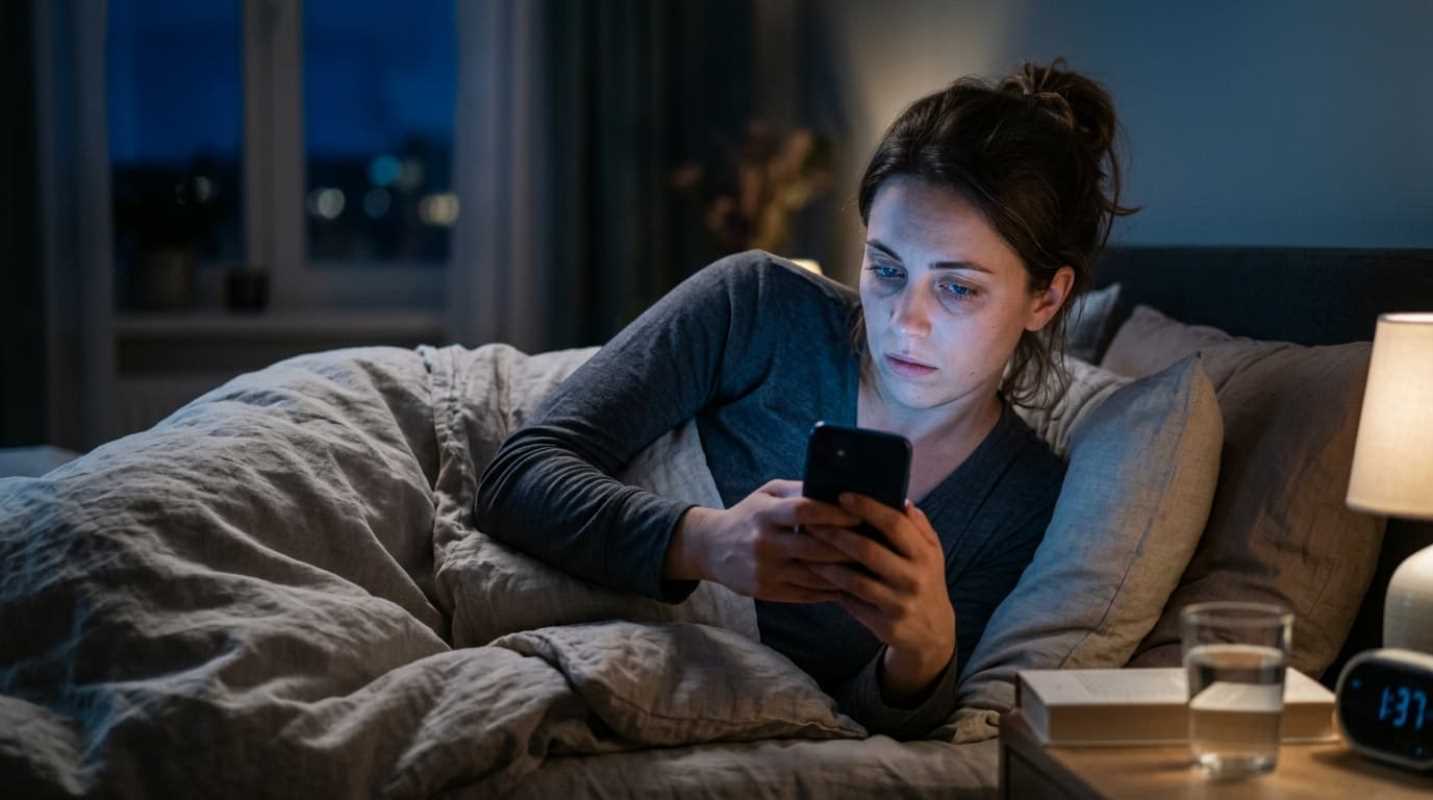
How many times have you checked your phone today? If you're like most of us, the number is probably high enough to make you cringe. From the second we wake up to the moment we drift off, we're bathed in a constant, invisible glow. It's the light coming from our phones, tablets, laptops, and television screens. Blue light is actually everywhere. It's a natural part of sunlight, which keeps us alert and energized during the day. The light itself isn't the problem. Our digital-first lifestyle is keeping us glued to artificial sources of this light long after the sun goes down.
Lately, this constant exposure has become a massive talking point in the wellness world. You've probably seen ads for blue-light-blocking glasses or apps promising to save your eyes. But how much of the panic is real, and how much is just clever marketing? Let's break down what the science actually says in 2026.
Digital Eye Strain and Why Your Eyes Feel Tired After Screen Time
Let's start with your eyes. We've all been there. After hours of staring at a monitor, your eyes feel dry, irritated, and heavy. You might even get a tension headache.
It's easy to assume that the blue light is frying your retinas. This fear has fueled a massive market for blue-light-blocking glasses and screen protectors. But the scientific consensus is clear. The blue light from your digital devices is far too weak to cause physical damage to your eyes.
Your phone screen isn't going to cause macular degeneration or blindness. So why do your eyes feel so terrible? It's because of digital eye strain, also known as computer vision syndrome.¹
Think of it like holding a light dumbbell. If you hold it for a minute, it's easy. If you hold it straight out for eight hours, your arm is going to scream in pain. That's what you're doing to your eye muscles when you stare at a monitor all day without taking a break.
When you stare at a screen, your blink rate drops significantly. Normally, you blink about 15 times a minute. When looking at a screen, that rate drops by 50% to 66%, down to just five to seven blinks a minute.¹
Blinking is what spreads a fresh layer of tears across your eyes. Without it, your eyes dry out, leading to redness, irritation, and fatigue.
What about those blue-light-blocking glasses? A major Cochrane systematic review analyzed 17 randomized controlled trials.² The researchers found that these glasses provide no clinical benefit for reducing eye strain or improving sleep quality compared to standard lenses.²
The American Academy of Ophthalmology doesn't recommend them.³ If you want to compare, think about the sun. The blue light exposure from spending just a few minutes outside on a sunny day completely dwarfs the blue light emitted by hours of screen time.
The Sleep-Wake Cycle and How Screens Sabotage Your Rest
Even though blue light doesn't damage your eyes, it has a massive impact on your brain. Specifically, it targets your circadian rhythm, which is your body's internal clock.
Your eyes contain specialized cells called intrinsically photosensitive retinal ganglion cells, or ipRGCs. These cells contain a light-sensitive protein called melanopsin, which is highly sensitive to blue light wavelengths between 480 and 490 nanometers.
When these cells detect blue light, they send a direct signal to your brain to stop producing melatonin, the hormone that tells your body it's time to sleep. Evening screen use can delay melatonin production by up to two hours. This delay makes it harder to fall asleep and reduces the amount of deep, restorative sleep you get.
A lot of the initial blue light panic came from a famous 2014 study where participants read on iPads in pitch-black rooms. But let's be honest. Who reads on a max-brightness tablet in a dark room for hours without any other light? It wasn't a realistic scenario.
Modern research shows that normal screen use just doesn't have that extreme of an effect unless the screen is blindingly bright right before you close your eyes. Researchers now emphasize that the total brightness of light is more important than the color alone. A very bright, warm-colored light in your bedroom will disrupt your sleep far more than a dim, blue-tinted screen. It's about the overall light intensity and timing, not just the color.
Also, blue light isn't bad by default. We actually need it during the day. Exposure to morning blue light is highly beneficial. It helps set your internal clock, making it easier to stay awake during the day and fall asleep at night.
Beyond the Eyes and the Link Between Screens and Mental Health
The connection between screen use, sleep disruption, and mental health is one of the fastest-growing areas of study. Have you ever noticed how a bad night of sleep makes you feel irritable, anxious, or completely overwhelmed the next day?
It's a vicious cycle. You stay up late scrolling because you're anxious, and the blue light from your screen delays your sleep. The next day, the lack of sleep makes you even more anxious, sending you right back to your phone the next night. Breaking this loop is one of the best things you can do for your mental clarity.
When evening light disrupts your sleep-wake cycle, it directly impacts your emotional regulation. Chronic sleep loss is a known trigger for anxiety and depression.
A notable clinical trial from late 2024 at St. Olavs Hospital in Norway showed how powerful managing light can be. In an acute psychiatric unit, researchers created a blue-depleted evening environment. They turned off blue LED lights, used amber lighting, and placed filters on televisions.
The results were remarkable. Patients in the blue-depleted environment showed rapid improvements, including stabilized sleep patterns and a significant reduction in aggressive behavior.
This light sensitivity is even more pronounced in people with bipolar disorder. Evening blue light can delay their internal clock, trigger sleep loss, and even spark manic or depressive episodes.
On the other hand, morning blue light is a highly effective treatment for depression. Many doctors recommend bright light therapy, which is rich in blue light, to treat Seasonal Affective Disorder and bipolar depression. It's all about when you get that light.
Actionable Blue Light Blocking Tips for a Balanced Digital Life
Managing your blue light exposure doesn't require buying expensive gadgets. You can protect your eyes, sleep, and mental health with a few simple, free habits.
Here is how you can build a healthier relationship with light
1. Practice the 20-20-20 rule: Look away from your screen every 20 minutes. Focus on an object 20 feet away for at least 20 seconds. This simple break forces your eyes to blink and relaxes your eye muscles.
2. Set a digital sunset: Start dimming your household lights and put away bright screens two to three hours before bedtime. If you must use your phone or computer, switch it to Night Shift or Dark Mode to lower the overall brightness.
3. Prioritize morning sunlight: Get 10 to 30 minutes of natural light early in the day. This anchors your circadian rhythm, boosts your daytime mood, and makes it much easier to fall asleep at night.
Sources:
1. Digital Devices and Your Eyes
https://www.aao.org/eye-health/tips-prevention/digital-devices-your-eyes
2. Blue-light filtering spectacle lenses for visual performance, macular protection, and sleep quality
https://www.cochrane.org/evidence/CD013244_blue-light-filtering-spectacle-lenses-visual-performance-macular-back-part-eye-protection-and
3. Are Computer Glasses Worth It?
https://www.aao.org/eye-health/tips-prevention/are-computer-glasses-worth-it
*This article on tikritus.com is for informational and educational purposes only. Readers are encouraged to consult qualified professionals and verify details with official sources before making decisions. This content does not constitute professional advice.*