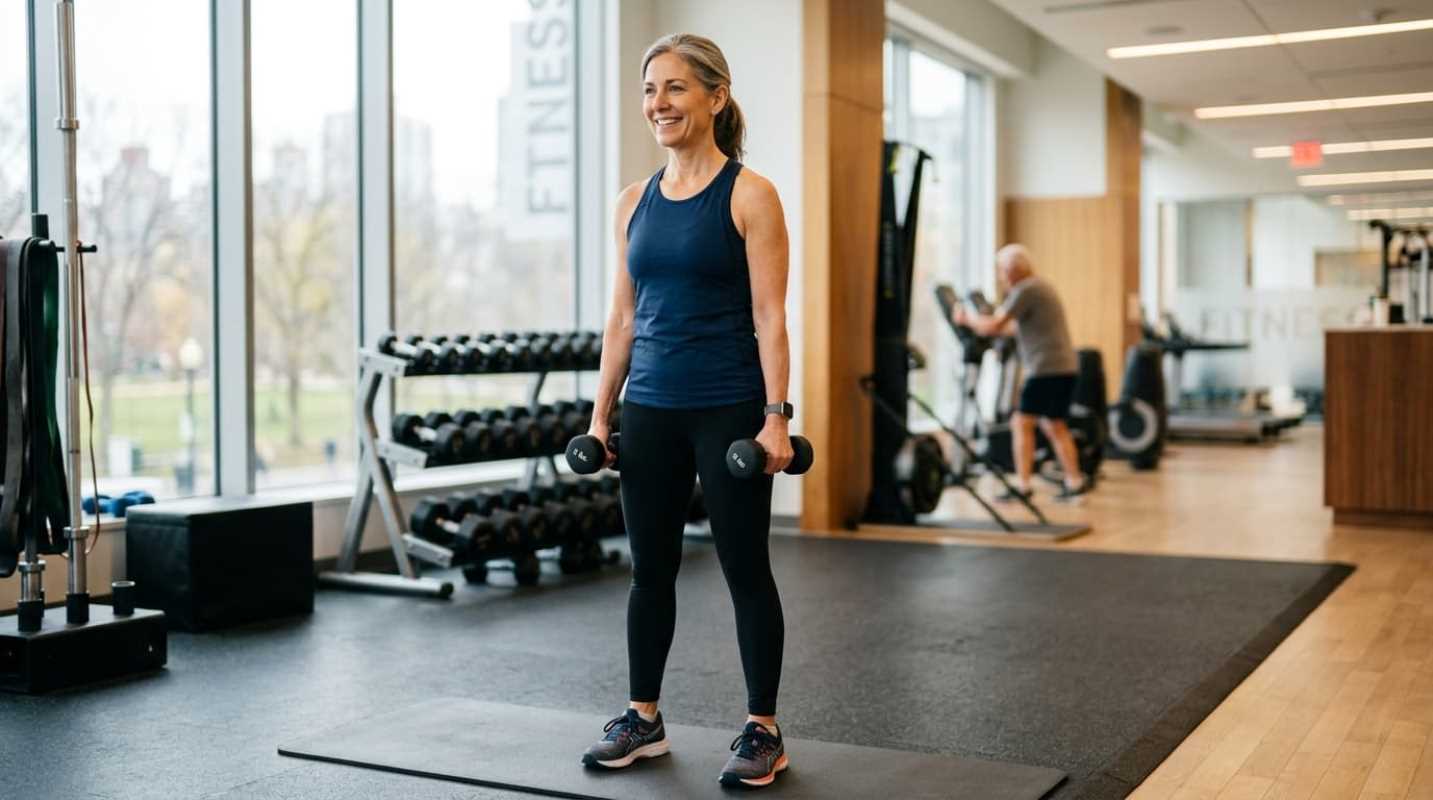
Remember when you thought lifting weights was only for young people aiming for beach bodies? That's one of the biggest myths in fitness. The truth is that picking up weights becomes far more important as you blow past your fiftieth birthday. It's time to throw that old image away. The reality of aging is that your muscles are your ticket to freedom. Strength training isn't about vanity. It's about keeping your life yours.
Why It’s Never Too Late to Build Muscle
Have you noticed that carrying groceries up the stairs or getting out of a deep armchair feels a bit harder lately? You might think that's just an unavoidable part of getting older. It's actually a sign that your muscles need a new kind of stimulus.
When you start lifting weights after 50, you aren't training to win a bodybuilding trophy. You're training to make sure you can still tie your shoes, lift your carry-on bag into the overhead bin, and play with your grandchildren on the floor without struggling to get back up.
The secret to success here is your mindset. You don't need to push yourself to exhaustion. In fact, doing too much too soon is the fastest way to quit. Focus on consistency. Simply showing up and moving your body regularly is where the real magic happens.
The Science of Strength Training After 50
Let's look at what's happening under the hood. Starting around age 30, your body begins to shed muscle mass. On average, you lose three to five percent of your muscle per decade, and this process accelerates once you cross the age 50 threshold.
Doctors call this age-related muscle loss sarcopenia. It sounds clinical, but the real-world impact is serious. A massive 2026 meta-analysis analyzing over 76,000 older adults found that sarcopenia is linked to a 79 percent increased risk of all-cause mortality and a 90 percent increased risk of functional decline.³
Fortunately, your body is incredibly resilient. Lifting weights is the most effective way to reverse this muscle loss.
The benefits of lifting go far beyond just building muscle. When you lift weights, your bones react to the stress by getting denser and stronger. This is your best defense against osteoporosis and fractures. Strength training also helps regulate your blood sugar, boosts your metabolic health, and stabilizes your joints to prevent falls.
If you think you need to spend hours doing complex routines, think again. The American College of Sports Medicine (ACSM) recently updated its resistance training guidelines for the first time in 17 years.¹ Their message is clear: consistency beats complexity.²
You don't need to lift until your muscles collapse. The guidelines show that simply moving from doing zero strength training to doing any strength training at all is where you get the biggest boost to your longevity.¹
Before you start, make sure to talk with your doctor. A quick conversation makes sure you're starting safely and helps you work around any old injuries or joint issues you might have.
Getting Started: The Fundamentals of Safe Weightlifting
When you start lifting after 50, your priority changes. Your number-one goal is to avoid injury. If you get hurt, you can't train, and if you can't train, you can't build strength.
To stay safe, keep these core principles in mind:
• Focus on form: Learn the correct movement pattern before you add any weight. If you can't do an exercise with perfect form, the weight is too heavy.
• Warm up first: As we get older, our tendons become thicker and less elastic. Spend five to ten minutes doing a brisk walk or some light, active stretching to get blood flowing to your joints before you lift.
• Start with bodyweight: You don't need dumbbells right away. Exercises like wall push-ups and chair squats are fantastic for building a foundation of strength.
• Use machines: Gym machines are excellent for beginners because they guide your body through a safe path of motion, reducing the risk of dropping weights or twisting the wrong way.
• Apply progressive overload: This just means making your workouts slightly more challenging over time. You can do this by adding one more repetition to your set, or by picking up a slightly heavier dumbbell once the current one feels easy.
What if you don't have time for long workouts? A 2026 study from Penn State found that just four minutes of daily resistance training can quadruple fitness and mobility in older adults in as little as 12 weeks.⁴ You don't need to live in the gym. Short, daily bursts of movement can completely change how your body feels.
Designing Your Routine
How should you set up your weekly schedule? The updated ACSM guidelines recommend targeting all your major muscle groups at least two days a week.¹
To get the most out of your time, focus on natural movement patterns that help you in everyday life. These include pushing, pulling, hinging, and squatting.
Here is a simple, 15-minute routine you can do right in your living room.
1. Sit-to-Stands (Chair Squats): 2 sets of 10 repetitions. This builds the leg strength you need to get out of chairs and cars easily.
2. Wall Push-ups: 2 sets of 10 repetitions. This strengthens your chest, shoulders, and arms.
3. Glute Bridges: 2 sets of 12 repetitions. This helps strengthen your hips and lower back.
4. Standing Single-Leg Balance: Hold a sturdy chair for support and balance on one leg for 30 seconds per side to build ankle stability.
Don't forget that rest is just as important as the workouts. Your muscles don't grow stronger while you're lifting. They grow stronger when you're resting. Make sure to give yourself at least 48 hours of rest between your strength sessions.
Nutrition and Lifestyle for Longevity
To get the most out of your new routine, you need to fuel your body correctly. As we age, our bodies experience a phenomenon called anabolic resistance. This means our muscles don't respond to protein as easily as they did when we were younger.
To overcome this, you need to consume more high-quality protein. The latest dietary guidelines recommend that active older adults aim for 0.8 to 1.0 grams of protein per pound of body weight daily.⁵ You can find this in foods like chicken, fish, eggs, Greek yogurt, beans, or a simple protein shake.
Hydration is another key factor. Drinking enough water keeps your joints lubricated and helps reduce the muscle soreness that comes with starting a new routine.
Most importantly, listen to your body. There's a big difference between the normal fatigue of a working muscle and the sharp, sudden pain of an injured joint. If an exercise hurts your joints, stop doing it. You can always find a safer alternative that keeps you moving forward.
Your Next Steps to Strength
Starting a strength routine after 50 is one of the best decisions you can make for your health. It's not about turning back the clock or chasing unrealistic fitness standards. It's about building a body that allows you to live life on your own terms.
You don't need to buy expensive gear or spend hours at a gym. Start with just a few minutes of simple movements today. Your future self will thank you for taking that first step.
Sources:
1. ACSM Resistance Training Guidelines Update 2026
https://acsm.org/resistance-training-guidelines-update-2026/
2. Move Your Bones PT: 2026 ACSM Resistance Training Guidelines
https://www.moveyourbonespt.com/blog/2026-acsm-resistance-training-guidelines
3. National Institutes of Health Sarcopenia Study
https://pmc.ncbi.nlm.nih.gov/articles/PMC12823505/
4. Penn State News: Four Minutes Daily Resistance Training
https://www.psu.edu/news/research/story/four-minutes-daily-resistance-training-can-quadruple-fitness-older-adults
5. Frontiers in Nutrition: Protein Intake and Muscle Health
https://www.frontiersin.org/journals/nutrition/articles/10.3389/fnut.2025.1685014/full
*This article on tikritus.com is for informational and educational purposes only. Readers are encouraged to consult qualified professionals and verify details with official sources before making decisions. This content does not constitute professional advice.*